
JMAP 2025 - On The Move
Four steep steps, a shuffling twist to the right, and there it was. I bore witness to a space similar to that of a generously sized hospital store cupboard – no more than two stride-lengths in width and perhaps five in length. At one end, a small desk and chair, adjacent to a vital-signs machine. At the other end, an examination table positioned with just about enough space to undertake physical assessments. Storage space underneath the examination table and within compact cupboards adjacent to the miniature sink, permitted the packing of a few basic medications, and little else.
Squeezed to one side was a soft bench, or as I quipped: the waiting room, serving as space for two, either patients awaiting assessment or while a loved one was being reviewed. Afterall, standing outside in the empty bright white concrete car park was hardly an option; temperatures soaring as summer simmered into action. Impressively ergonomic in its design, a sliver of curtain provided a partition of, well, pseudo-privacy for patients; scarcely enough to anaesthetise them from the harsh and indefinite state of privation, temporarily providing an illusionary humane experience.
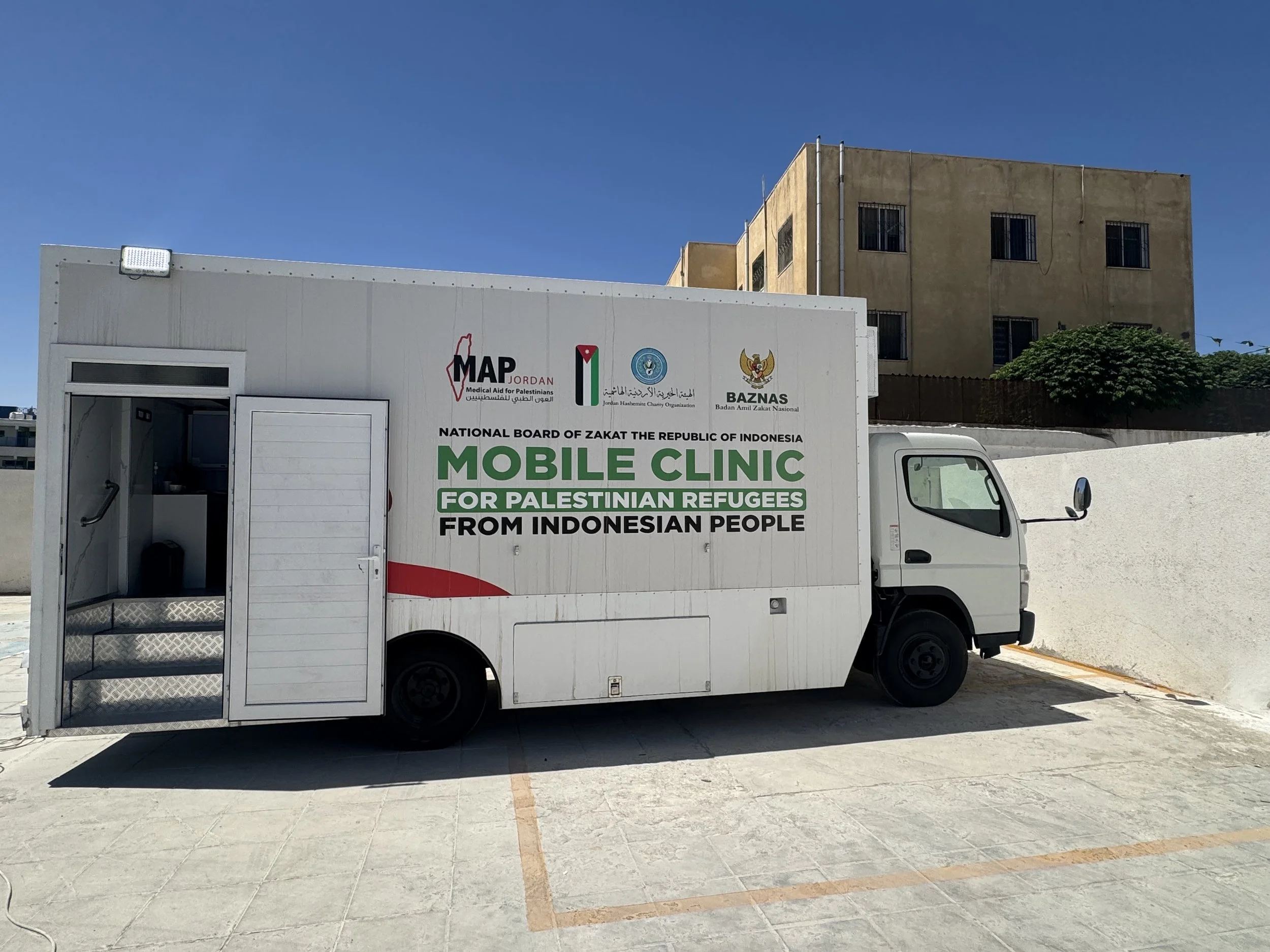
The Mobile Clinic
In its second day at the Zarqa refugee camp
Many more to come
A large van. This is where I would be running my clinic for the day. Strategically sited within the car park belonging to the United Nations-run primary school of the Zarqa refugee camp – situated 15 miles northeast of Jordan’s capital city, Amman. Here stood the newly launched Jordan Medical Aid for Palestinians (JMAP) mobile clinic (“عيادة متنقلة”). In fact, just two days prior, the mobile clinic had made the 6 mile trip south from the As-Sukhnah camp, a Palestinian refugee camp established in 1969, where it had spent nearly six months serving its refugees with remarkable effectiveness. An executive decision was made by the JMAP leadership to reposition the mobile clinic to attend to the refugees of the Zarqa camp where a great deal of pressure had mounted on the existing, but increasingly strained, healthcare frameworks of the camp.
The Zarqa camp is the oldest Palestinian refugee camp in Jordan, located on the outskirts of the city of Zarqa. It was one of the four camps established in the country, by the International Committee of the Red Cross in 1949, to accommodate the refugees who fled Palestine as a result of the 1948 war. With over 20,000 refugees residing within a 0.07 square mile area, the camp is perpetually exposed to the challenges and risks of an overcrowded population, not only health and sanitation problems, but also access to local education facilities. Moreover, the population – like many others – has not been immune to the cost of living crisis, with those who have been lucky enough to hold down basic employment no longer able to provide for those closest to them, having scarcely been doing so before.
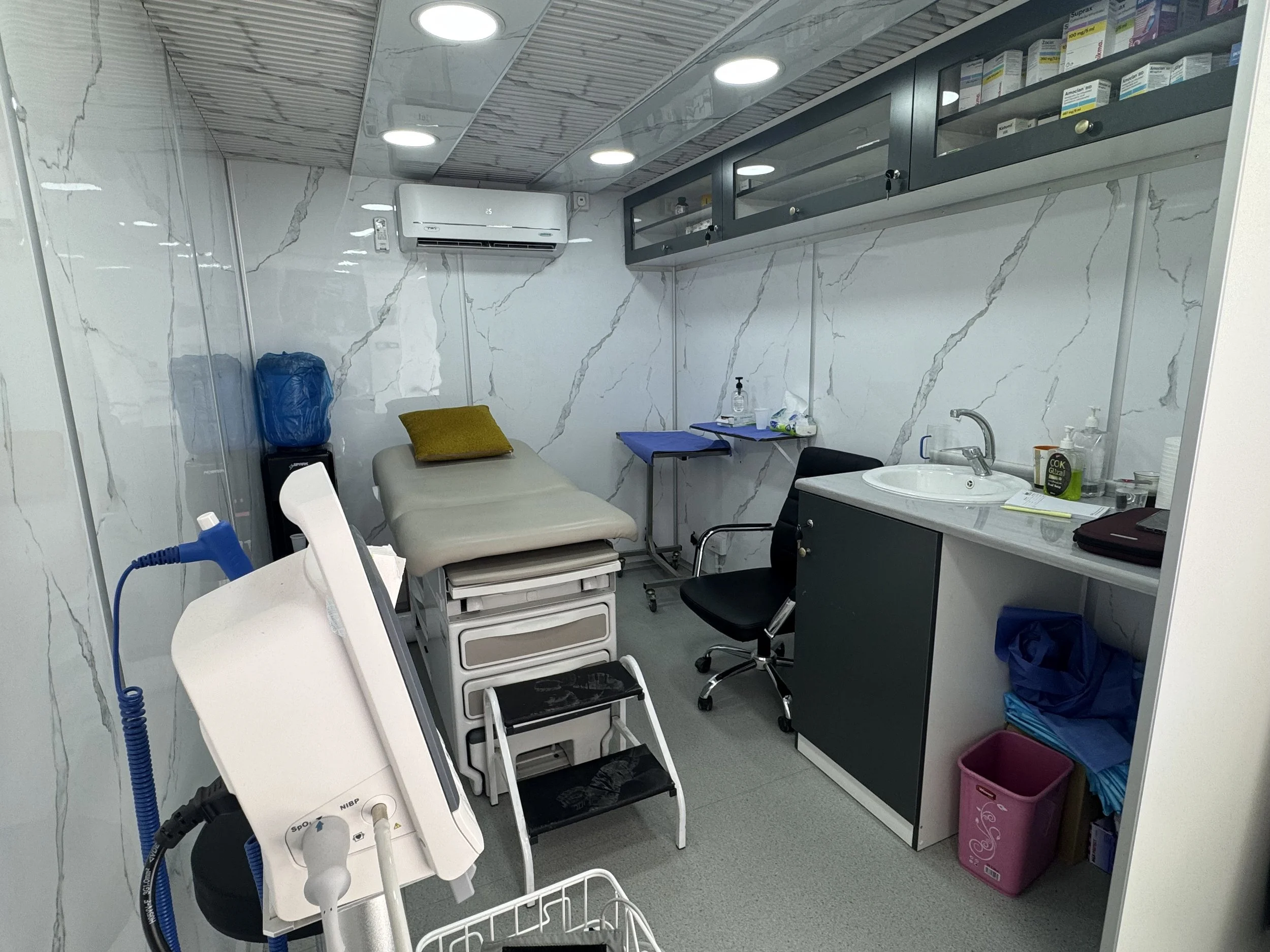
Set up to do ordinary things
Do the ordinary things extraordinarily well
I told myself
Readers of my previous reflections will be aware of JMAP’s presence within three refugee camps: Hiteen/Schneller, Talbieh and Jerash/Gaza. Notwithstanding the excellence and breadth of their services, this has little eased the mounting burden upon the Zarqa Camp Health Centre where, having been reliably informed, over 300 patients per day are reviewed between a small handful of general practitioners, nurses and pharmacists; sparked into instinctive clinical decision-making regarding an array of acute and chronic illnesses, and appropriately managing patients presenting with undifferentiated symptoms: in other words, when a diagnosis has yet to be made. It is a truly remarkable effort given the paucity of resources and the tightness of time on their hands.
Yet, their hand was about to strengthen. Thanks to the generous donation from the National Board of Zakat of the Republic of Indonesia, the JMAP mobile clinic was launched in November 2024 to provide integrated healthcare services within the Zarqa Governate. Starting in As-Sukhnah, where it had subdued the daily rush down the road to the Zarqa Camp Health Centre, the mobile clinic now positioned itself strategically within the heart of the Zarqa camp itself, just one day before my arrival. In fact, upon arriving in Jordan for this humanitarian visit, I was actually under the impression that my work would be within the As-Sukhnah camp. However, careful foresightedness between the medical team on the ground and the JMAP leadership team informed the change of location. Not only does the mobile clinic improve the coverage of, and access to, primary care facilities where the health infrastructure is stretched, but it also brings with it secondary care specialists, flexibly adapting to the needs of the health and wellbeing needs of the local population.
For the provision of rheumatology care, I was attached to a team consisting of a general practitioner and a clinic nurse. It was only the second day within the Zarqa refugee camp, yet the JMAP team had shrewdly delivered the message to the residents of the camp through the local health centre and, intriguingly, through word of mouth. And while the clinic generated a comparatively modest number of patients (16) when compared to the usual workload during the other JMAP clinics, the quality and relevance of the referrals were impressively high yield - lupus, Behcet’s, rheumatoid, vasculitis, and a few soft tissue musculoskeletal conditions. While this may be very interesting to, even enjoyable for, a rheumatologist, I’m sure the limited availability of time and lack of opportunities for follow ups proved frustrating for the patients whose struggles for the basic necessities of life are all-consuming.
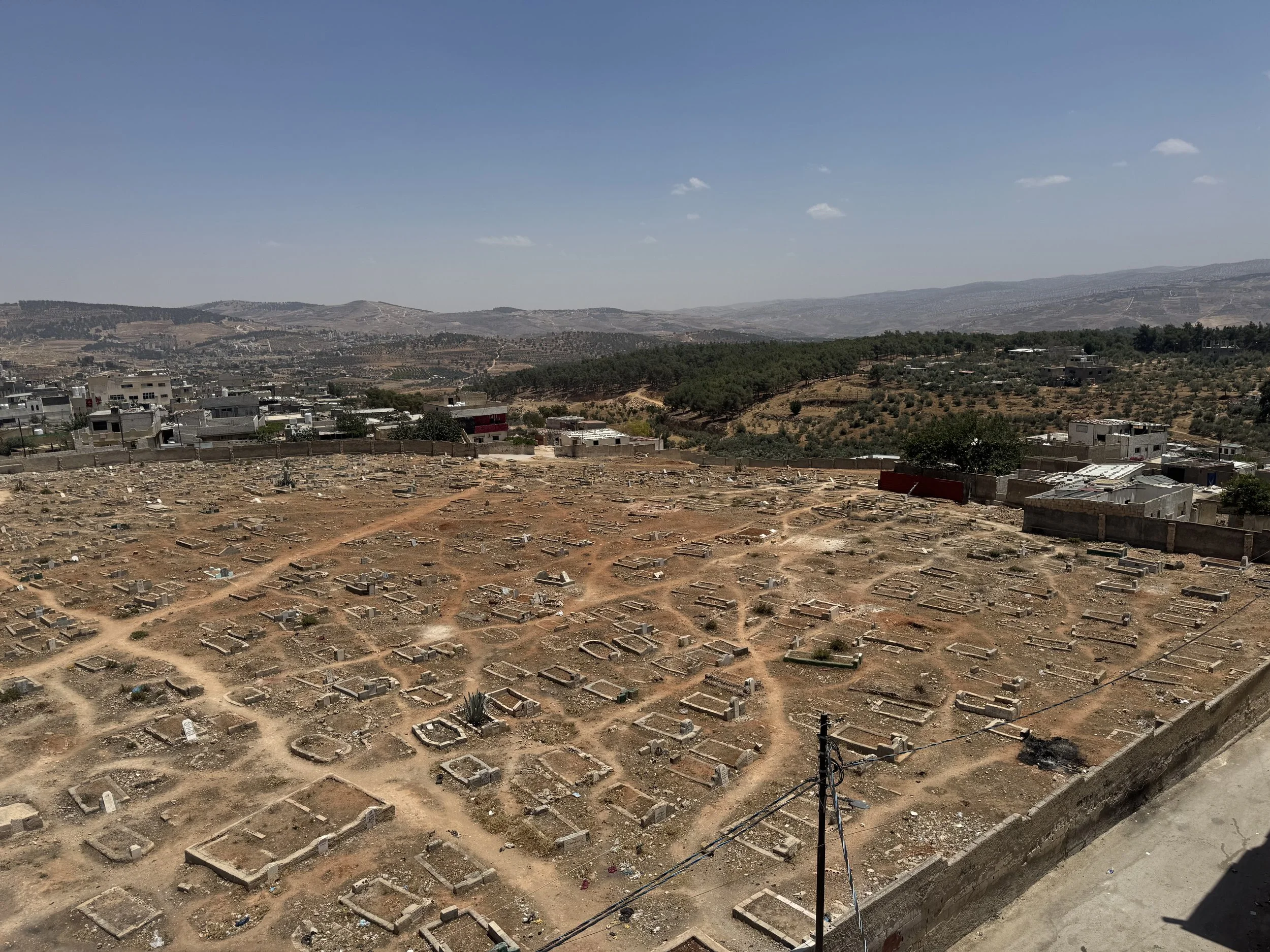
I revisited the Gaza refugee camp in Jerash
My customary visit to the clinic rooftop after a day’s work
A view that remains as sobering as ever
I spoke about the amazing resilience of these refugees in past blogs, but this resilience never ceases to amaze me. So, I ask myself, what is it that makes these almost forgotten people able to endure and grapple with their horrid fate with understated dignity? Is it the enduring hope, perhaps, of a better future for their loved ones? Is it a deep belief that all this suffering will be rewarded by a better reception at the gates of Heaven? Is it the tight-knit family structure which makes a problem shared a problem halved? Is it the silent acceptance of the status of victim that has unremittingly been visited upon these refugees? I can’t pretend to know the answer, but I do know that if we, here in Britain, were to be exposed to 10 percent of what these people undergo with abiding dignity, we would not be able to cope for a minute. Yes, we can go out there to alleviate their human suffering, but, by Jove, they can teach us a lot about being grateful for what we have. And - yes - the NHS creaks under many pressures, but we should be thankful it does exist and should never take it for granted. Complacency is not an option.
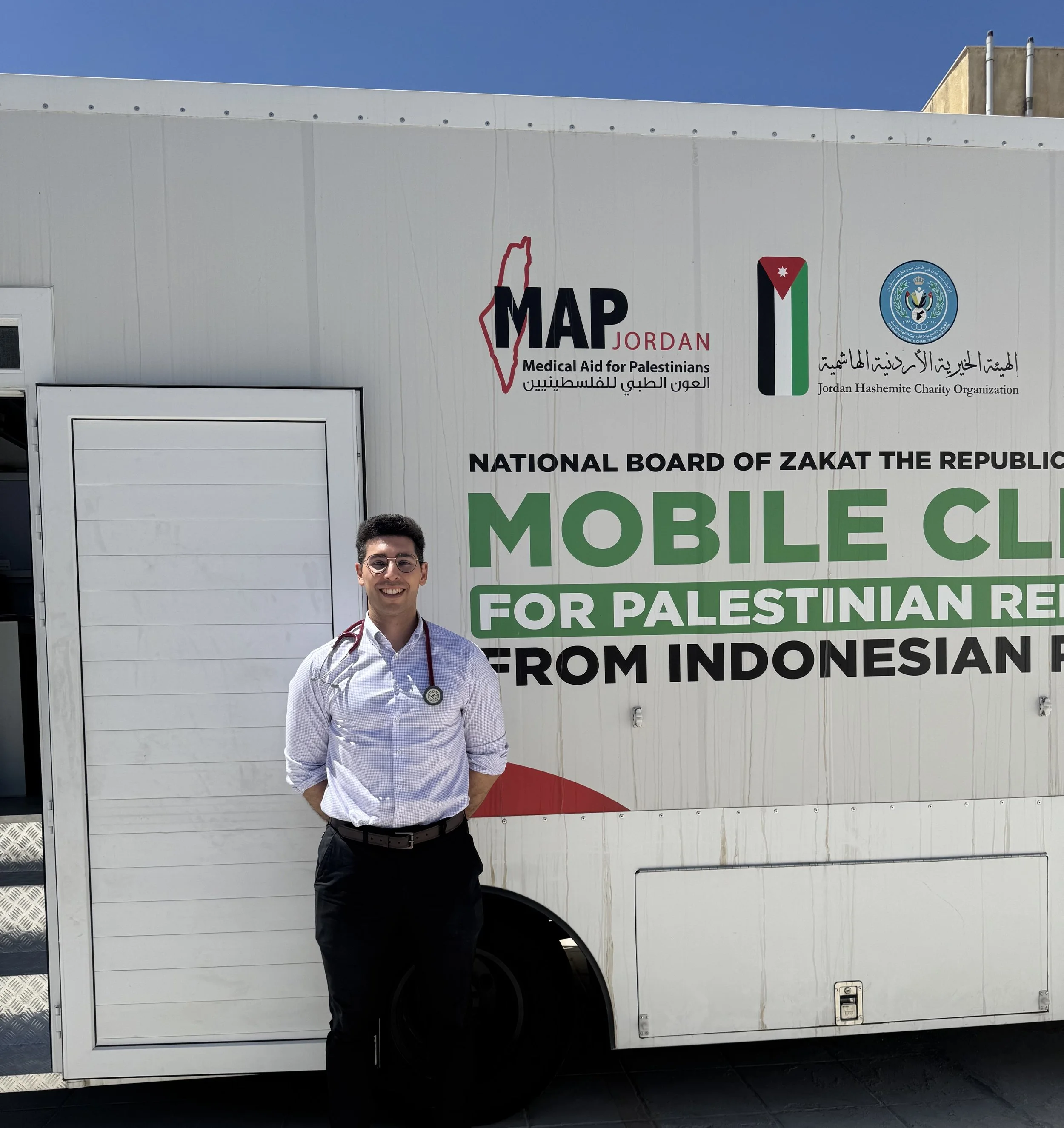
Not a typical day in the office
But a day in which I learned plenty
Adaptability and resilience being key themes
